We use cookies to improve your online experience. By continuing browsing this website, we assume you agree our use of cookies.
icon email
icon map
Haizhu District,
Guangzhou, 510000
icon phone
TEL: +86-20-34174605
MOB: +86 17727659022(whatsapp)
Industry News

Medical Equipment Supplier Strategy: Standardizing Spare Parts Across Hospital Sites

Views : 14
Author : YSENMED Editorial Team
Update time : 2026-11-27 15:34:39

A hospital network may buy the same category of equipment for several locations and still end up with incompatible accessories, different software versions and confusing service records. The difficulty appears after delivery: a replacement item reaches the wrong site, a photograph cannot identify the required connector, or a department orders an accessory that fits a similarly named model. Choosing a medical equipment supplier therefore involves a question that a unit price cannot answer: how will the equipment fleet remain identifiable and supportable?

For hospitals and distributors serving Africa and South America, this is a practical procurement issue. Distances between sites, local service arrangements and import lead times vary considerably. A useful strategy documents these conditions for the actual destination instead of treating an entire region as one operating environment. Standardization can help organize supply, but it must follow clinical requirements and verified compatibility.

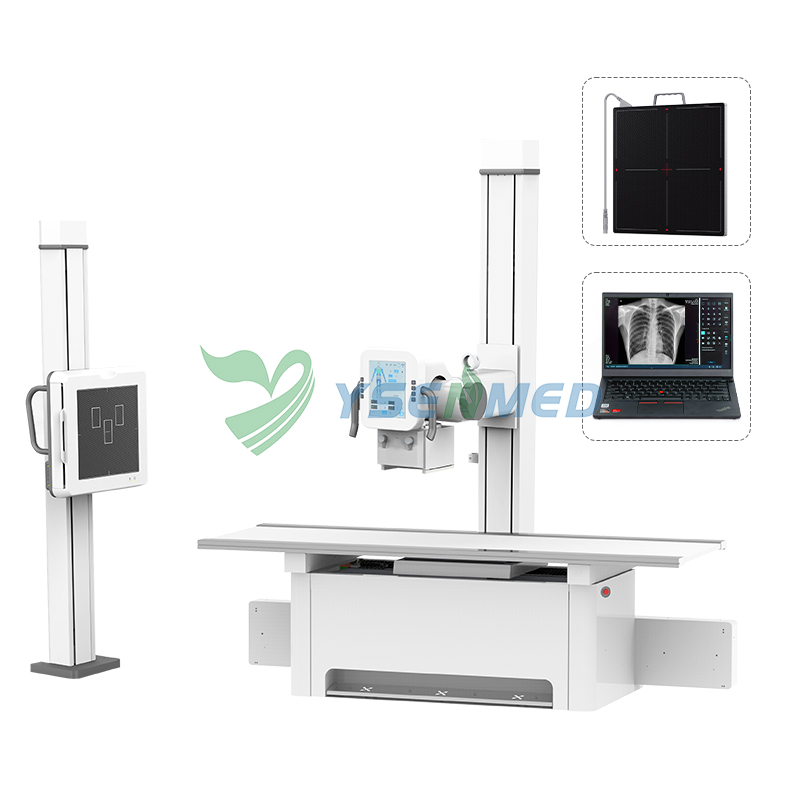
YSENMED digital X ray machine for a hospital equipment fleet
YSENMED digital X ray machine for a hospital equipment fleet. Product illustration; configuration subject to confirmation.

Define What Standardization Should Achieve

Begin with the problem the organization wants to solve. It might need fewer accessory variants, clearer technical records, predictable maintenance purchasing or a simpler route for escalating faults. These objectives are related, but they do not require every department to use an identical device.

Separate clinical functions from logistical preferences. A specialist department may legitimately need a different configuration. The procurement team should document that exception and its service implications rather than forcing a common model into an unsuitable role. The aim is controlled variation with clear records.

A standard should consequently describe the approved configuration, not just a preferred brand. It can include the main unit, fitted options, accessory references, manuals and the support organization responsible for that installation.

Build the Equipment Register Before the Next Tender

Create a register of the devices already installed at each location. Record the manufacturer, exact model, serial identifier, installation date and department. Link photographs of labels and supplied accessories to the corresponding record. Avoid sending these records publicly; make them available through the organization's approved support process.

Include configuration information that can affect replacement decisions. An ultrasound console may have specific probes and activated software options. An X ray machine may use a particular detector, acquisition workstation and connection arrangement. Two devices with similar commercial names can have different supporting components.

Ask local teams to verify uncertain entries. A partially completed register with visible gaps is safer than a seemingly complete spreadsheet built from assumptions. Resolve the important gaps before ordering common spare stock.

Classify Parts by Consequence and Supply Route

Not every replacement item deserves the same stocking approach. Distinguish routine accessories, specialist service parts and components whose failure would interrupt a critical service. The facility's technical and clinical teams should assess consequences together.

Then document the supply route. Some items may be available through a local partner; others may require identification and dispatch from the original supplier. Ask which components can be replaced by appropriately trained local personnel and which require an authorized service intervention.

Do not assume that a high-value component belongs in every storeroom. Storage conditions, useful shelf life, technical installation needs and the likelihood of use all matter. A spare-parts plan is a reasoned inventory policy, not a second purchase of the complete machine.

Verify Compatibility at the Part-Number Level

A quotation describing a cable as universal is insufficient when compatibility has not been established. Request the manufacturer's accessory reference and the supported equipment configurations. If an alternative item is proposed, ask who has verified it and which documentation supports that decision.

Record connector information, applicable software dependencies and any required setup or calibration. A compatible physical connection alone does not establish that an accessory is suitable for the intended device or use.

Use a formal approval route for substitutions. The biomedical engineering team or another responsible technical professional should review the proposal before purchasing authorizes it. Keep the accepted reference attached to the equipment record so the next buyer does not have to repeat the same investigation.

Discuss X Ray Machine Fleets as Systems

When evaluating several X ray machine installations, document the complete imaging configuration. Include detectors, workstations, positioning accessories and the route used to request technical assistance. A common generator brand does not establish that all these components are interchangeable.

For example, a hospital may have a fixed digital room and a mobile unit. Their operational roles differ, and a detector-sharing proposal needs technical review rather than an assumption that similar dimensions guarantee compatibility. Charging, software recognition and the manufacturer's intended configuration may all be relevant.

Use catalog research to organize the discussion. YSENMED's X ray machine configurations provide a starting point for a model-specific inquiry. The final fleet specification should identify which items are common, which remain dedicated and how each installation is supported.

Apply the Same Discipline to Ultrasound Scanners

An Ultrasound Scanner fleet can become difficult to manage when probes move between departments without a record. Identify the console, each probe and its assigned location. Keep cleaning instructions, handling guidance and repair information linked to the correct reference.

Ask whether a proposed replacement probe is supported by the exact console and software configuration. Do not generalize from a matching connector or a photograph. Where loan equipment is discussed, clarify the clinical functions and accessories actually available during the loan period.

Review YSENMED Ultrasound Scanner options with a list of intended applications and existing equipment. A supplier can respond more usefully when the inquiry identifies the installed configuration and the problem the organization is trying to solve.

Plan Regional Stock Around Actual Delivery Conditions

A distributor serving several hospitals may consider a central stock location, local satellite stock or direct shipment for certain items. Compare these approaches using the organization's own demand records and documented delivery experience.

Consider who owns the stock, who can release it and how unused items are returned or reassigned. A regional store is only useful when the inventory record reflects what is physically present and suitable for use.

Review the destination-specific import process with the responsible importer. Component descriptions, manufacturer references and supporting documents should agree. Avoid promising a standard clearance time across countries; the purchasing plan should identify uncertainties and the person responsible for resolving them.

Give Every Support Request a Minimum Information Set

Create a short support form that staff can complete without dismantling equipment or attempting unauthorized repairs. Useful information may include the asset identifier, observed symptom, displayed message, time of occurrence and actions already taken under the device instructions.

Keep patient information out of ordinary troubleshooting photographs unless the organization has an approved and necessary disclosure process. Often, a photograph of the equipment label or accessory is enough to identify the component.

Ask the medical equipment supplier to confirm its preferred escalation route. Define the first contact, the technical assessment stage and the decision required before parts are ordered. This reduces the chance of buying a component before the fault has been appropriately assessed.

Write Responsibilities Into the Supply Agreement

Specify who maintains the configuration record, approves replacements and coordinates technical work. Clarify warranty assessment, freight arrangements, service travel and exclusions in the actual agreement. A warranty duration alone does not explain how assistance will reach a distant facility.

Request operating and service information appropriate to the responsibilities assigned locally. The WHO technical-specification framework treats documentation, maintenance and procurement as connected issues; buyers can use that framework to structure questions without assuming that every suggested provision is included in a supplier's standard offer.

Record any stock or response arrangements that have genuinely been agreed. Avoid relying on a broad promise of permanent availability, especially when a device or accessory could change during its service life.

Use a Small Pilot Before Expanding the Policy

Test the proposed process with one equipment family or a limited group of sites. Check whether staff can identify accessories correctly, whether the register is usable and whether a support request reaches the intended recipient.

Use a tabletop exercise rather than deliberately interrupting clinical equipment. Present a hypothetical fault or replacement request and follow the paperwork through identification, approval and procurement. The exercise can reveal missing references without creating an operational disruption.

Revise the policy using what the pilot shows. An exception log is valuable: it explains why a site needs a different component and prevents future purchasers from treating that difference as an error.

Questions Hospital Buyers Commonly Ask

Does standardization mean buying every device from one manufacturer?

No. A network can standardize records, support information and approved accessories while using several manufacturers. The clinical requirement should lead. Supplier consolidation is a commercial choice that needs its own assessment of support coverage and dependency.

Should hospitals keep expensive replacement components locally?

There is no universal answer. Review the impact of downtime, technical replacement requirements, storage conditions and supply options. Ask the responsible technical team to justify stock choices using local circumstances rather than copying another hospital's inventory.

What should be sent with the first supplier inquiry?

Provide the equipment category, exact existing models, site locations and the service problem. Identify which accessories need verification and what support is available locally. Request a documented compatibility response and a separately priced parts proposal.

Prepare the Next Equipment Purchase for Its Full Working Life

A medical equipment supplier can help organize specifications and sourcing, but the hospital network needs a consistent internal record and approval process. Those two responsibilities work together. Neither a large catalog nor a central store solves unidentified configurations.

Start with the installations that are hardest to support, establish the required references and agree on the escalation route. Then apply the same discipline to future equipment orders. Explore YSENMED's medical equipment supplier catalog and request a configuration-based discussion covering the departments, locations and support responsibilities involved.

For further procurement context, consult the WHO user guide to technical specifications for medical devices. Its framework can help teams ask better questions while the final specification remains grounded in the intended device, destination and facility.

YSENMED ultrasound scanner illustrating a second hospital equipment category
YSENMED ultrasound scanner illustrating a second hospital equipment category. Product illustration; configuration subject to confirmation.

Further Reading

WHO technical specifications user guide

Related News
Read More >>
Mortuary Equipment Capacity Planning: Storage, Transfers and Power Contingencies Mortuary Equipment Capacity Planning: Storage, Transfers and Power Contingencies
Nov .27.2026
Assess mortuary equipment capacity, transfer routes, maintenance access and power contingencies for hospitals and funeral service facilities.
Veterinary Equipment and Referral Imaging: Keeping X-Ray and Ultrasound Records Connected Veterinary Equipment and Referral Imaging: Keeping X-Ray and Ultrasound Records Connected
Nov .27.2026
Plan veterinary X ray machine and ultrasound records, referral access and equipment support for clinics in Africa and South America.
Operating Room Equipment Reliability: Power, Accessories and Daily Readiness Operating Room Equipment Reliability: Power, Accessories and Daily Readiness
Nov .27.2026
Review operating room equipment power requirements, accessory compatibility and readiness checks for hospitals in Africa and South America.
Obstetrics & Infant Equipment: Connecting Ultrasound, Delivery and Newborn Care Obstetrics & Infant Equipment: Connecting Ultrasound, Delivery and Newborn Care
Nov .27.2026
Coordinate an Ultrasound Scanner, delivery-room devices and infant equipment for maternity services in Africa and South America.