We use cookies to improve your online experience. By continuing browsing this website, we assume you agree our use of cookies.
icon email
icon map
Haizhu District,
Guangzhou, 510000
icon phone
TEL: +86-20-34174605
MOB: +86 17727659022(whatsapp)
Industry News

Mortuary Equipment Capacity Planning: Storage, Transfers and Power Contingencies

Views : 32
Author : YSENMED Editorial Team
Update time : 2026-11-27 15:45:27

Mortuary storage capacity is often described by the number of compartments in a quotation. That number matters, but it does not explain whether the facility has suitable access, handling equipment, maintenance space or an operational response to an interruption. A capacity plan needs to connect storage with the way the service receives, identifies, transfers and releases people entrusted to its care.

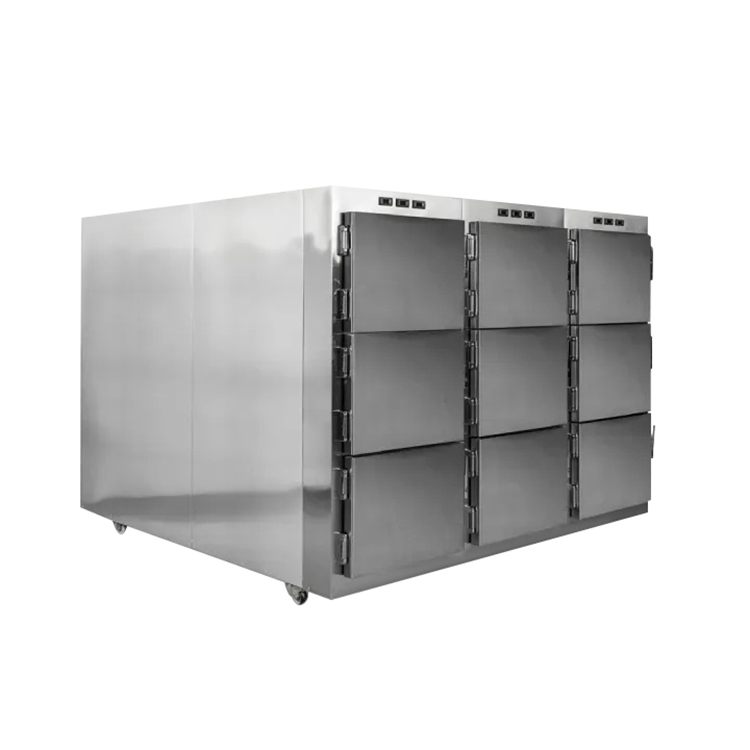
Mortuary equipment examples in the YSENMED product catalog
Mortuary equipment examples in the YSENMED product catalog. Product illustration; configuration subject to confirmation.

Hospitals and funeral service facilities in Africa and South America work within different local rules, referral systems and infrastructure conditions. This article examines Mortuary Equipment as an operational planning project. It does not prescribe preservation procedures, storage temperatures or statutory requirements. Those decisions should be established by the relevant local authorities, responsible professionals and the manufacturer's device-specific instructions.

Separate Physical Capacity From Usable Capacity

The advertised number of storage positions is only the starting point. The facility must consider which positions are appropriate for its intended service, how they can be accessed and what supporting equipment is needed to use them.

Ask the responsible team to describe the expected workload using its own records. Identify ordinary demand, observed variation and circumstances that could change the duration of storage. Do not apply a generic regional occupancy assumption.

Record any operational restrictions on particular positions. Maintenance, access constraints or specialized requirements can affect the number of positions actually available. Procurement decisions should reflect usable capacity under the facility's approved procedures rather than a compartment count alone.

Review Demand Through Arrivals and Length of Stay

Capacity depends on both the number of arrivals and how long storage is needed. A facility with modest daily arrivals may still experience pressure if administrative or transfer processes create longer stays.

Use local historical information where it is available, and clearly label estimates where it is not. Review the data with the team responsible for the service rather than treating a sales forecast as an operational model.

Develop a small number of scenarios. Consider normal activity, an expected busy period and a defined interruption affecting part of the capacity. These are planning scenarios, not predictions. Their value is in identifying what the facility would need to review or arrange in each case.

Map the Complete Transfer Route

Trace the route from the receiving point to storage and from storage to the authorized release location. Note doorways, turns, changes in level and any shared corridors. The dimensions of the freezer are not the only dimensions that matter.

Ask for information about the proposed trolley, lifter, tray and storage arrangement. The responsible staff should review their compatibility and the working space needed for the intended handling process.

Preserve dignity and appropriate privacy in the layout discussion. Operational efficiency should be considered alongside secure access, respectful movement and the facility's approved identification procedures. Equipment placement needs to support those responsibilities rather than create avoidable exposure or confusion.

Match Storage and Handling Equipment

A storage unit, trolley and lifting device may appear suitable individually while creating difficulties when used together. Request the relevant dimensions, supported interfaces and manufacturer information for the proposed combination.

Do not assume that similar tray dimensions establish full compatibility. Loading arrangements, supported use and handling responsibilities should be reviewed for the actual equipment. Ask who is responsible for confirming the complete configuration.

YSENMED's Mortuary Equipment categories and mortuary freezer options provide a starting point for this discussion. An itemized inquiry should explain the receiving route, storage arrangement and existing handling equipment so the proposed package can be assessed as a working combination.

Include Maintenance Access in the Layout

A storage installation needs to be maintainable after the room is furnished. Ask the supplier for the manufacturer's installation and access information, including the space and conditions needed for routine service.

Qualified local professionals should assess the proposed room and supporting infrastructure. Procurement staff should avoid assigning clearance or ventilation values from unrelated products or assuming that any available room is suitable.

Consider how a service visit will affect nearby equipment and working areas. If a unit cannot be accessed without blocking a transfer route, that constraint belongs in the design review. Resolving it before installation is usually more manageable than reorganizing an active facility later.

Define Monitoring and Escalation Responsibilities

Ask which monitoring and alarm functions are included in the quoted unit and what additional arrangements the facility must provide. Device specifications should identify actual supplied functions rather than rely on an illustration or broad description.

The facility must decide who receives an alert, how it is acknowledged and who can authorize the next operational step. A signal is useful only when the responsible team can act through an agreed process.

Document the distinction between equipment indication and professional assessment. Staff should follow the manufacturer's instructions and local procedures when a concern occurs. A purchasing article cannot establish a universal threshold or action for every facility.

Plan Power Contingencies Locally

Obtain the manufacturer's electrical and operating requirements for the selected model. Qualified local electrical and refrigeration professionals should assess the installation and proposed continuity arrangements.

Avoid assuming that a storage unit has the same behavior under interruption as another product with a similar appearance. Performance depends on the specific design, installation, loading conditions and other factors that need technical assessment.

The facility should define an operational contingency plan through its responsible leadership. That may include access to alternative capacity or an agreed transfer arrangement, subject to local requirements. Equipment purchasing should identify the information needed for that plan without promising an unverified duration of protection.

Distinguish Reserve Capacity From Informal Overflow

A reserve arrangement should have a defined location, responsible contact and approval process. An empty compartment elsewhere is not automatically available for transfer or suitable for the intended purpose.

If the facility relies on another organization, confirm the practical conditions of that cooperation. Consider who authorizes the transfer, how records remain connected and what handling equipment is available at both ends.

Review the arrangement periodically. A contact list that has not been maintained may fail when it is needed. Capacity planning should therefore include communication and records, not only a hardware purchase.

Make Cleaning and Material Information Part of the Order

Request the manufacturer's instructions for the supplied surfaces, trays and components. The facility's responsible professionals should review these within the local cleaning and infection-prevention procedures.

Ask which parts are removable, which materials are compatible with the intended approved process and what access is needed. Do not substitute a general statement that stainless steel is easy to clean for device-specific information.

Plan storage for equipment and supplies used in that workflow. Clear separation of roles and spaces can make the process easier to manage, but the detailed procedure must be determined locally. Procurement should provide the documentation and configuration information required for that decision.

Compare Total Installation and Ownership Scope

Request separate prices for the storage unit, handling equipment, accessories, delivery and technical services. Clarify the boundary between the supplier's work and local room preparation.

Discuss service support before the equipment is ordered. Ask how an issue is assessed, who can attend the site and how replacement components are identified. Record costs and exclusions in the actual agreement.

A medical equipment supplier should be asked to explain assumptions, especially for destinations far from its service partners. Treat response arrangements as contractual details to be confirmed, rather than infer a guaranteed outcome from the existence of a warranty.

Prepare a Capacity Review Worksheet

A practical worksheet can combine five information groups: demand, storage positions, transfer routes, infrastructure and support. Assign an owner to each group and record which details have been verified.

Under demand, show the local information and assumptions. Under storage, list the intended configuration and any unavailable positions. Under transfers, identify the equipment and routes. Under infrastructure, record the professional assessments still needed. Under support, list escalation and contingency contacts.

Use the worksheet in the supplier discussion and the local design review. Its purpose is to make missing information visible. A completed form should not be treated as regulatory approval or evidence that every professional requirement has been satisfied.

Questions Buyers Often Raise

How many compartments should a facility purchase?

There is no single number for all hospitals or funeral facilities. Use local arrival patterns, storage duration, reserve arrangements and usable capacity. Review the resulting plan with the people responsible for operations and local requirements.

Can existing trolleys be used with a new freezer?

Potentially, but the complete interface and supported handling arrangement need confirmation. Provide the existing model information and dimensions, then request a documented compatibility review.

Does backup power eliminate the need for a contingency plan?

No. Equipment faults, maintenance and other disruptions can affect capacity independently of power. The facility should define a broader response through its responsible professional and operational teams.

Turn a Compartment Count Into a Working Service Plan

Mortuary Equipment should be selected within a respectful, traceable and maintainable service. A useful specification connects storage positions with the handling equipment, room conditions and support needed to manage them.

Explore YSENMED's relevant categories and prepare a site-specific inquiry. Include expected demand, access information, existing equipment and the local professionals involved. Request a clearly itemized configuration and model-specific installation documentation. That preparation gives the facility a firmer basis for assessing capacity, planning continuity and supporting dignified daily operations.

Related News
Read More >>
Veterinary Equipment and Referral Imaging: Keeping X-Ray and Ultrasound Records Connected Veterinary Equipment and Referral Imaging: Keeping X-Ray and Ultrasound Records Connected
Nov .27.2026
Plan veterinary X ray machine and ultrasound records, referral access and equipment support for clinics in Africa and South America.
Operating Room Equipment Reliability: Power, Accessories and Daily Readiness Operating Room Equipment Reliability: Power, Accessories and Daily Readiness
Nov .27.2026
Review operating room equipment power requirements, accessory compatibility and readiness checks for hospitals in Africa and South America.
Obstetrics & Infant Equipment: Connecting Ultrasound, Delivery and Newborn Care Obstetrics & Infant Equipment: Connecting Ultrasound, Delivery and Newborn Care
Nov .27.2026
Coordinate an Ultrasound Scanner, delivery-room devices and infant equipment for maternity services in Africa and South America.
Medical Equipment Supplier Strategy: Standardizing Spare Parts Across Hospital Sites Medical Equipment Supplier Strategy: Standardizing Spare Parts Across Hospital Sites
Nov .27.2026
Plan spare parts, accessories and service records with a medical equipment supplier for hospital networks in Africa and South America.