We use cookies to improve your online experience. By continuing browsing this website, we assume you agree our use of cookies.
icon email
icon map
Haizhu District,
Guangzhou, 510000
icon phone
TEL: +86-20-34174605
MOB: +86 17727659022(whatsapp)
Industry News

Operating Room Equipment Planning: A Procurement Checklist for New and Renovated Hospitals

Views : 151
Author : YSENMED Editorial Team
Update time : 2026-10-12 16:50:00

Begin with the room's intended services

An operating room equipment list becomes useful only when it reflects the services the hospital plans to provide. A new hospital and a department undergoing renovation can require different purchasing sequences, access arrangements and handover plans. Start with the intended surgical specialties, room count, staffing model and relationship with recovery, sterilization and supporting departments. Ask the clinical team to distinguish essential equipment from optional additions. The result should be a coordinated purchasing brief, not a list assembled from unrelated catalogues. This gives procurement staff a way to evaluate each proposed item against an actual operational requirement and makes later changes easier to control.

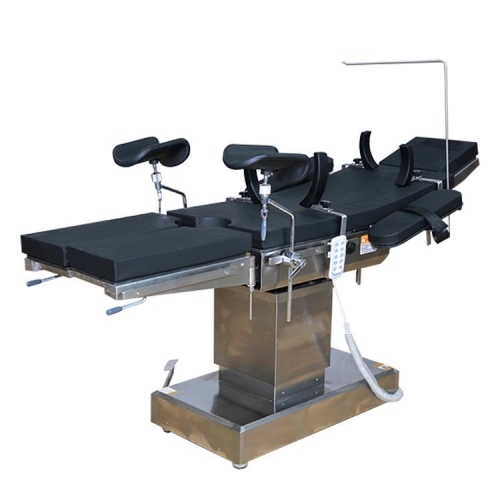
YSOT-YT5D operating table — product image
YSOT-YT5D operating table — product image · Product source

Create a multidisciplinary review group

Include the clinical users, anesthesia team, biomedical engineers, infection prevention staff, facilities team and purchasing representatives. Information technology and specialist contractors may also need to review particular interfaces. Assign one person to maintain the equipment schedule and record approved changes. Without a shared schedule, two departments can order overlapping accessories or assume that another contractor will provide an essential connection. Agree how conflicting requirements are resolved and who can approve substitutions. Supplier recommendations can support the discussion, but the hospital remains responsible for defining the intended service and ensuring that the final design receives the appropriate professional review.

Group the equipment list by function and responsibility

Organize the schedule into patient positioning, lighting, anesthesia, monitoring, electrosurgery, suction, infusion, storage and other specialty-specific requirements. These groups are planning categories rather than a universally sufficient list for every operating room. For each item, record the quantity, intended room, proposed model, required accessories and responsible supplier. Distinguish shared departmental resources from equipment dedicated to a room. Also identify devices supplied by the hospital from existing stock. A coordinated schedule prevents a package from appearing complete simply because it contains many items. Completeness means satisfying the approved requirement, including interfaces and supporting arrangements.

Evaluate tables, lights and room geometry together

An operating table should be reviewed with the clinical team for its intended procedures, positioning requirements, accessories and documented limits. Lighting arrangements need their own assessment of placement and room use. Where imaging equipment is planned, assess access and compatibility as part of the overall layout rather than after the table has been ordered. Obtain equipment drawings and installation requirements before confirming the room plan. Ceiling-mounted equipment introduces structural and coordination questions that require qualified review. A product image is useful for identification, but it cannot replace dimensioned drawings or establish that the proposed equipment will fit the room.

YSAV6201A anesthesia machine — product image
YSAV6201A anesthesia machine — product image · Product source

Confirm anesthesia, monitoring and accessory scope

Request an itemized configuration for anesthesia and monitoring equipment rather than relying on a broad package name. The responsible clinicians should identify the required functions, patient population, accessories and compatibility considerations. Record which breathing-system components, sensors, cables, mounts or other accessories are included and which must be ordered separately. Ask the supplier to identify the exact model and software version where relevant. A missing consumable or connector can prevent a delivered device from being used as intended even when the main console is present. Clinical suitability and release for use must be assessed by the appropriately qualified hospital team.

Map every building and equipment interface

Create an interface register covering electrical supply, earthing, medical gases, suction, structural supports, network connections and environmental requirements where applicable. For each connection, name the party that designs it, installs it and verifies it. Connector types and supply requirements must be confirmed for the actual destination and equipment; international delivery does not automatically resolve local compatibility. Coordinate equipment installation with building completion and access restrictions. The supplier should provide the necessary device information, while qualified designers and contractors handle the site-specific work within their scope. A clear interface register is more reliable than the informal assumption that installation includes everything.

Plan renovation without assuming uninterrupted operation

For an existing hospital, establish which rooms and services will be affected and how equipment will be moved or replaced. Survey access routes, door openings, lifts and storage areas before the delivery date. Confirm how removed equipment is handled and whether it can be reused following the required assessment. The hospital should approve the operational transition and infection prevention arrangements. A staged schedule may be appropriate, but it must be based on actual dependencies. Do not promise zero downtime without a reviewed plan. Identify the tasks that can occur before shutdown and those that require the room to be taken out of service.

A Ghana example of a documented equipment delivery

In its Ghana hospital case, YSENMED records the supply of a YSOT-YT5D operating table and a VG70 ICU ventilator. The report describes customer photographs and feedback following installation. It does not establish that a complete operating department was designed or delivered.

This distinction matters when evaluating one-stop proposals. Ask which devices, installation tasks, building services and training activities belong to the current offer. An ICU ventilator should not be assumed to substitute for every anesthesia or operating-room ventilation requirement. Each device must be selected for its documented intended use by the responsible clinical team.

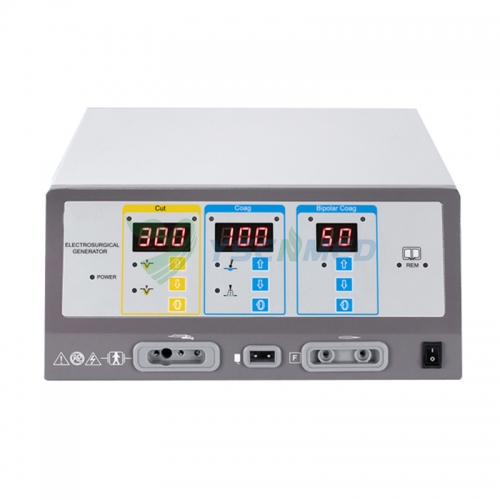
YSESU-300S electrosurgical generator — product image
YSESU-300S electrosurgical generator — product image · Product source

Use a responsibility matrix for the purchase

Alongside the equipment schedule, list delivery, unloading, storage, assembly, specialist installation, functional checks, acceptance and training. Give each task a named owner and an agreed completion requirement. Add the documents and prerequisites needed before the task can begin. For example, equipment assembly may depend on completed supports or confirmed utilities. If one supplier coordinates several manufacturers, ask how technical issues are escalated and which party provides warranty support. A one-stop purchasing arrangement can simplify communication, but it does not remove the need to define responsibilities. The matrix should be part of the project record rather than an informal conversation.

Request comparable commercial and service terms

Compare offers on the same equipment configuration and delivery basis. Separate base equipment, optional accessories, freight, installation, training and service costs. Ask for warranty start dates, exclusions, consumable coverage, parts availability and the process for reporting faults. Clarify whether support is remote, local or provided through an agreed visit, and distinguish response targets from repair completion commitments. For a tender, preserve the original requirement numbering and request explicit deviations. Review substitutions before approving them. A technically acceptable offer and a commercially attractive offer should refer to the same deliverables; otherwise the apparent savings may reflect an incomplete scope.

Prepare acceptance and handover records

Before delivery, agree what must be checked, who conducts the checks and which documents are required. Handover should identify models, serial numbers, accessories, manuals, installation records and unresolved items. Appropriate technical, functional and safety verification must be completed by the responsible qualified personnel. Training attendance and equipment orientation should be recorded separately from the technical checks. A photograph of a furnished room documents appearance, not acceptance of every system. Where items remain incomplete, create a dated action list with an owner. The hospital should control the process for release into service under its applicable procedures.

Build maintenance into the room plan

Plan how equipment can be accessed for inspection, service and replacement without unnecessary disruption. Establish an equipment register and assign maintenance responsibilities after handover. Request manufacturer documentation, service contact details and the agreed schedule for preventive activities. Confirm how consumables and accessories will be reordered and whether critical spare items should be held locally. Keep software, configuration and training records accessible to the people who need them. The project is easier to sustain when maintenance is treated as an ownership responsibility from the beginning, rather than an issue to discuss only when a device stops working.

Final questions for the project team

Is the proposed package a complete operating room? Only the approved requirement and responsibility matrix can establish its scope. Can existing accessories be reused? Their compatibility and condition need verification. Does a supplier handle every building approval? That must be stated explicitly and checked against local responsibilities. Should all rooms receive identical equipment? Standardization may help, but specialty requirements and existing infrastructure can justify differences. Before ordering, ask each stakeholder to confirm the equipment schedule, interfaces, exclusions and acceptance plan. This final coordinated review can prevent avoidable surprises between purchase approval and the first operational handover.

Related News
Read More >>
Veterinary Clinic Equipment Planning: A Practical Guide to Imaging, Surgery and Laboratory Setup Veterinary Clinic Equipment Planning: A Practical Guide to Imaging, Surgery and Laboratory Setup
Oct .27.2026
A practical procurement framework for matching veterinary imaging, surgical and laboratory equipment to the services a clinic can support.
Lead Protection Door Delivered to El Salvador Lead Protection Door Delivered to El Salvador
Oct .21.2026
YSENMED has delivered the YSX1525 Lead Swing & Sliding Door X-ray Lead Protection Door to our customer in El Salvador.
Color Doppler Ultrasound Delivery to Mali Color Doppler Ultrasound Delivery to Mali
Oct .21.2026
A doctor in Mali received the YSB-S7 Color Doppler Trolley Ultrasound Machine from YSENMED. The customer shared positive feedback on the image quality and after-sales service.
Veterinary Anesthesia Equipment Delivered to Argentina Veterinary Anesthesia Equipment Delivered to Argentina
Oct .21.2026
An anesthesiology veterinarian in Argentina ordered a veterinary anesthesia system, an animal vital signs monitor, and a syringe pump from YSENMED.